Solutions · Education
In a school the constraint is not detection, it is the morning peak: a gate that has to clear the whole roll call in the twenty minutes before the bell, without turning arrivals into a queue that spills onto the street.
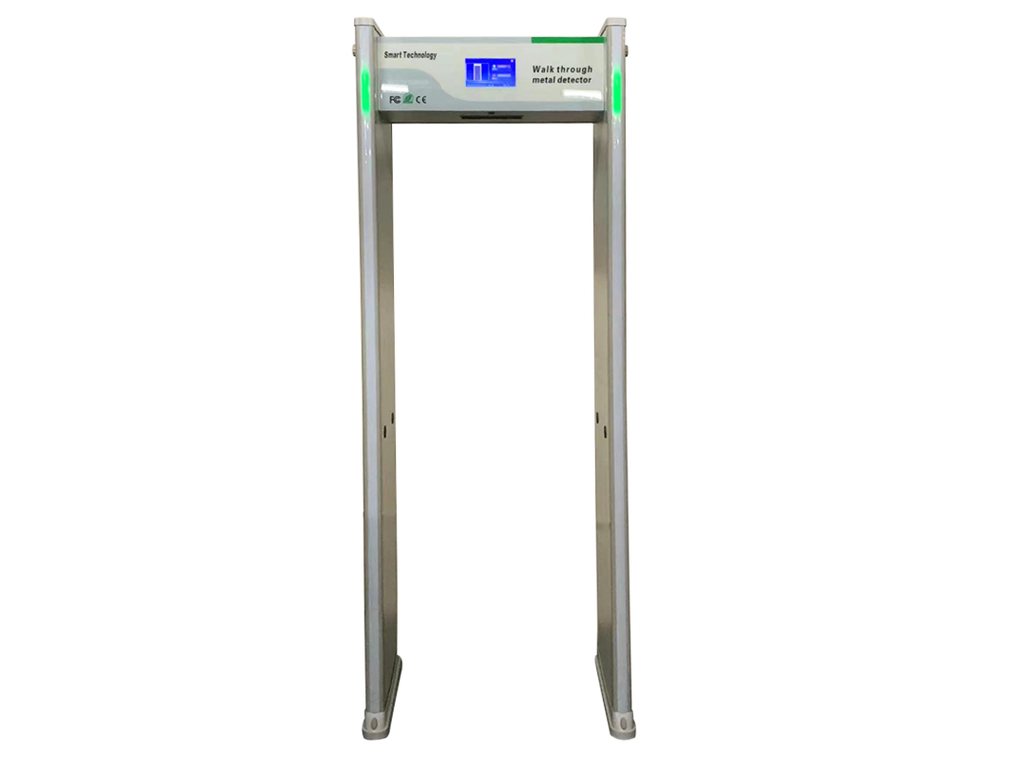
Two queues, one deadline: the person lane and the bag lane have to finish together.
Arrival in a school is a spike, not a flow. Four hundred students do not arrive evenly across an hour; they arrive in a short window, and the gate either absorbs that window or it becomes a visible problem on the street outside. Two things buy time: resolving alarms in seconds rather than minutes, and keeping the bag lane separate from the person lane so a backpack search never stops the walking queue.
A walk-through gate resolves the large majority of passes without intervention. The throughput limit is almost never the gate itself — it is how many alarms need a secondary check, and how many of those checks escalate into a bag being opened. Foot-zone sensitivity adjustment removes the single biggest source of nuisance alarms in a school: footwear. A handheld detector with a vibration mode lets a staff member resolve a borderline alarm quietly and quickly, close to the gate, without a public search.
Do the arithmetic from your own bell schedule rather than from a marketing number. Count the students arriving in the busiest ten minutes, decide how many of them will be carrying a bag, and treat the person lane and the bag lane as two independent queues that have to finish at the same time. We size lanes with you from that arrival curve; if you send us the numbers we will tell you honestly whether one lane is enough.
A typical campus deployment. The number of lanes follows your arrival curve, not a fixed rule.
| Location | Equipment | Why this choice |
|---|---|---|
| Main student entrance | Walk-through metal detector TS-WD33D + handheld detector MD-3003B1 | Person screening happens first and fastest. The handheld resolves alarms in seconds at the gate instead of moving a student to a separate room. |
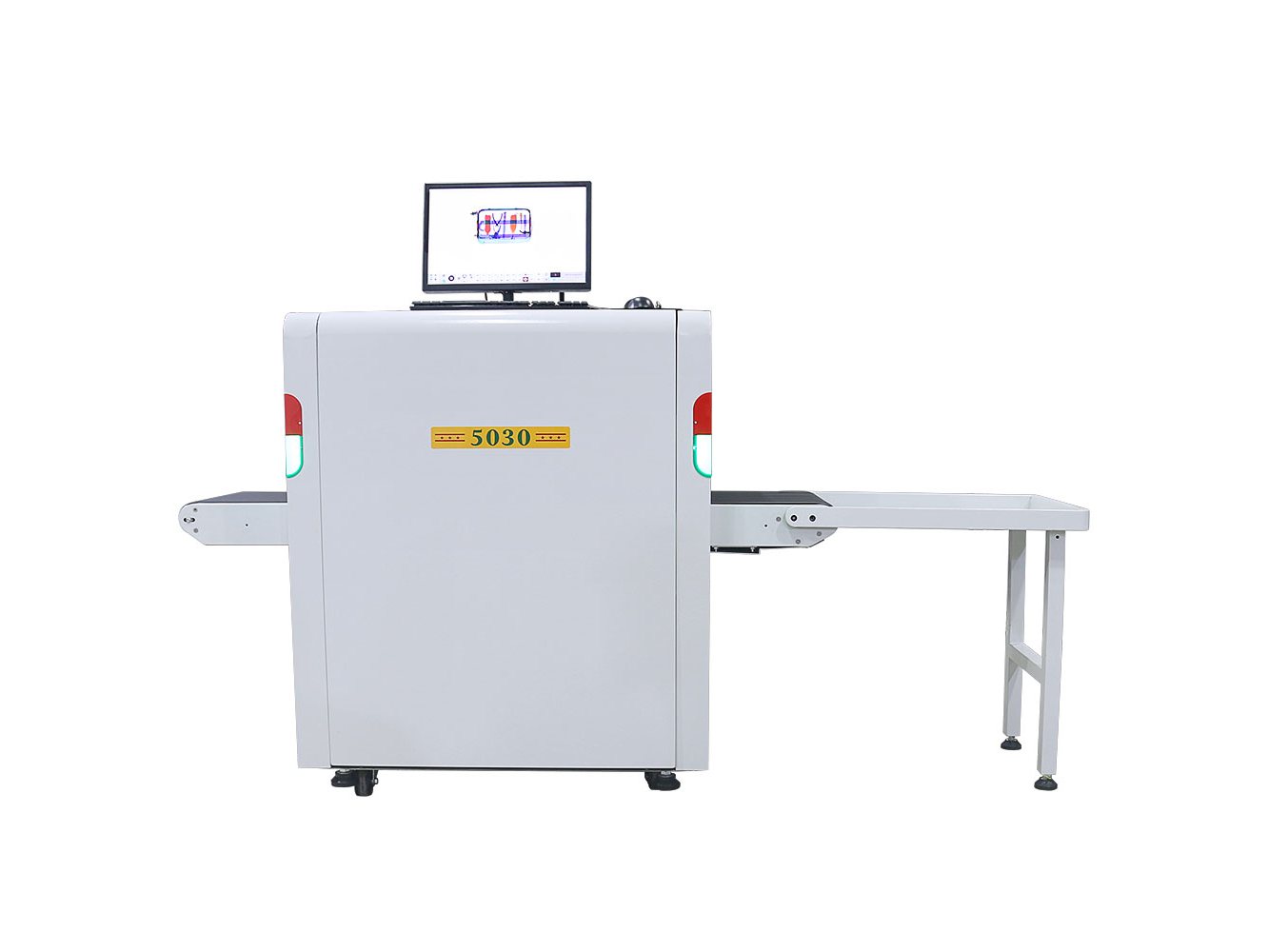
| Backpack and bag lane | Compact X-ray scanner TS-5030A, 500 × 300 mm tunnel | Backpacks, instrument cases and lunch boxes pass through without opening. Lead curtains isolate the tunnel at both openings. |
| Visitor and staff entrance | Walk-through gate plus visitor bag screening | Visitor flow is the least predictable in any campus. Screening at the door removes the need to police bags once they are inside. |
| Sports, equipment and deliveries | Handheld detector, or a medium-tunnel unit where cartons are routine | Large equipment does not fit a compact tunnel. Screening it at the delivery door avoids a second handling step inside the building. |
What decides whether the arrangement survives the second week of term.
At a school gate we recommend metal detection for people and X-ray for bags. That combination detects what schools actually intercept — knives, improvised weapons and prohibited metal items — while the bag tunnel handles what a metal detector cannot see, such as a ceramic blade, a plastic handle or a sealed container. The X-ray beam is confined to the tunnel; the person never enters it.
We do not propose transmission body-screening systems for school gates, and we say so plainly. Those systems are built for controlled institutional populations such as correctional facilities and customs, they image the person rather than the bag, and they need an operating framework that a school entrance does not usually have. Recommending one for a queue of minors would be an easy sale and a bad one; the metal-detection configuration does the work at a fraction of the cost, space and operational burden.
Two practical points. A walk-through metal detector emits no ionising radiation at all — it is a pulsed magnetic field, and it does not affect pacemakers, pregnancy or magnetic media. For the bag scanner, the reference configuration produces no more than 3.0 µGy per inspection inside the tunnel, with leakage under 1.0 µGy/h at the external surface, and it is guaranteed safe for ASA/ISO 1600 film.
The gate itself passes a person every couple of seconds, so the practical limit is how many passes need a secondary check. In a school that number is driven by footwear and by bags. Send us your busiest ten-minute arrival count and the proportion of students carrying bags, and we will size the lanes from that rather than from a brochure figure.
The walk-through gate emits no ionising radiation. The X-ray unit screens bags; a person never enters the tunnel. The reference configuration is within 3.0 µGy per inspection inside the tunnel with external leakage under 1.0 µGy/h, and the units ship with their test reports.
No. Foot-zone sensitivity is adjustable per zone, which is specifically there to handle footwear without asking anyone to remove it.
Yes, and it is the usual route. Most campuses start with a person gate at the main entrance and a compact bag scanner, then add a second lane or a visitor gate once the flow is known. All units share the same operating logic, so staff do not retrain.
The country, the number of entrance points, the busiest arrival count, whether bags are screened, and the space available at each gate including door or corridor width. We reply with a recommended configuration and pricing, normally within one business day.
Tell us the country of installation and the intended use, and we will send the full technical catalogue and pricing.
Contact: Brandon, Sales Manager
Email: deal@topsaful.com
Tel / WhatsApp: +86 156 1616 8054
We usually reply within one business day.