Solutions · Courthouses and public buildings
A courthouse entrance clears hundreds of visitors, jurors, staff and lawyers through the same lobby before the morning session. The equipment has to separate genuine threats from keys and belt buckles in seconds, and it has to look institutional rather than militarised. This page covers the entrance layout, the equipment for each checkpoint, and the questions court administrators ask before ordering.
One public lane, one staff lane, one secondary-check position.
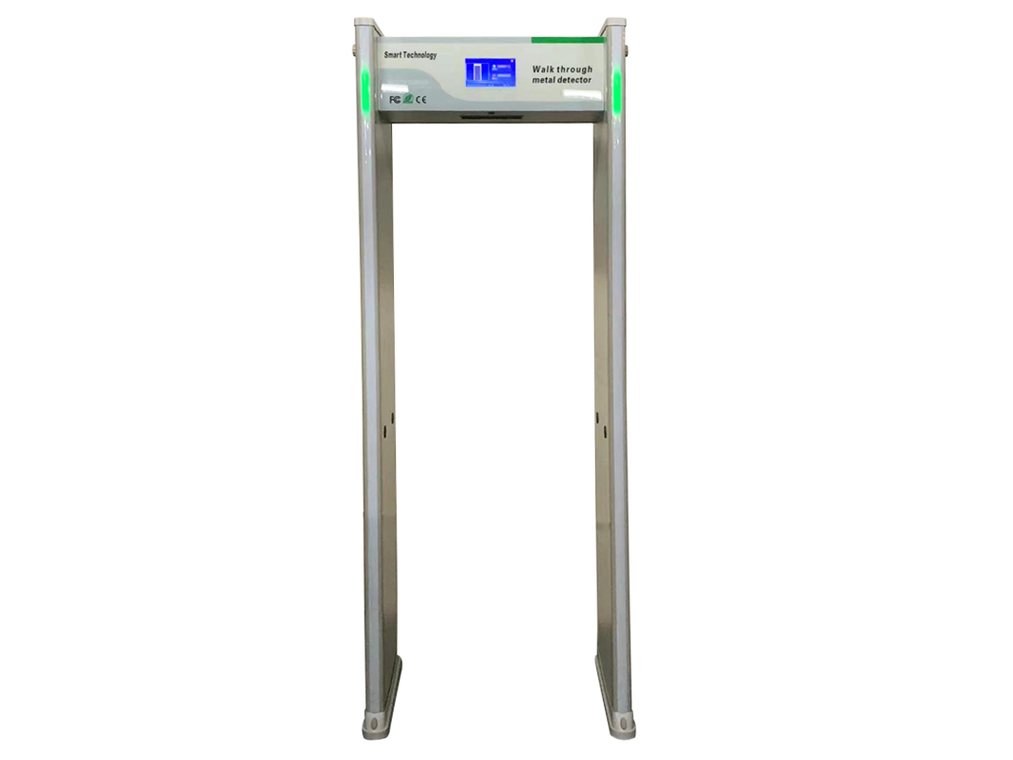
The checkpoint has one job: nothing metallic that should not be there gets past the lobby, and everyone who is not a threat moves through without a second look. A walk-through metal detector does the first pass. Zones light up where metal is found, a handheld detector resolves the alarm at a secondary-check position, and bags, briefcases and files go through an X-ray scanner on the parallel lane.
Sensitivity is the operational decision. Set too high, every belt and coin alarms and the queue grows until the corridor is blocked; set too low, a small blade passes. This is why we recommend multi-zone gates whose sensitivity can be tuned per zone rather than only globally, so the lane keeps moving while the alarm rate stays meaningful.
Public buildings also carry files, evidence and confiscated items through the same entrance. A compact X-ray tunnel at the staff and law-enforcement entrance keeps that flow separated from the public lane, which is usually the cheapest possible fix for the worst daily bottleneck.
Each entrance type gets a different mix — most buildings need three of the five.
Indicative configuration. The final mix is set by your floor plan, staffing model and the daily visitor count.
| Checkpoint | Equipment and why |
|---|---|
| Public walk-through lane | Multi-zone gate (6–33 zones) with LED zone indication; sensitivity set per zone so belts and coins do not stop the lane. |
| Secondary check | Handheld metal detector, Ø 1–2.5 mm ball sensitivity classes, sound and light alarm with vibration for quiet courtrooms. |
| Bag and file screening | X-ray baggage scanner from the 500 × 300 mm compact class upward, tunnel sized to the largest item your lobby accepts. |
| Controlled-entry wing | TS-F20090 full-body X-ray scanner where the security level requires screening the person, not only the bags. |
| Vehicle gate | Under vehicle surveillance system: mirror type for manned gates, camera type for drive-through lanes. |
It is set by the morning arrival curve, not by the size of the building. Count the visitors, jurors and staff entering in the busiest twenty minutes, then size the public lane so that queue never reaches the street. Send us those numbers and we will propose the lane count and the layout.
Yes. Zone sensitivity is adjustable, and officers carry handheld detectors to resolve what the gate does flag. The goal is a meaningful alarm rate, not zero alarms.
No. Gates and scanners install in hours, not days, and most courthouses phase the work lane by lane so one entrance stays open throughout.
Test reports, the operator manual and a technical file are supplied with the units, together with CE, FCC and RoHS certification. Tender-specific documentation can be prepared on request.
Tell us the country of installation and the intended use, and we will send the full technical catalogue and pricing.
Contact: Brandon, Sales Manager
Email: deal@topsaful.com
Tel / WhatsApp: +86 156 1616 8054
We usually reply within one business day.