Solutions · Corrections
Contraband enters a prison through five doors: visitors, staff, mail and property, deliveries, and vehicles. Each needs a different detection principle, and the visitor door is the one that has to keep working all weekend without turning a family visit into an ordeal.
Five entry routes, five detection principles, one integrated procedure.
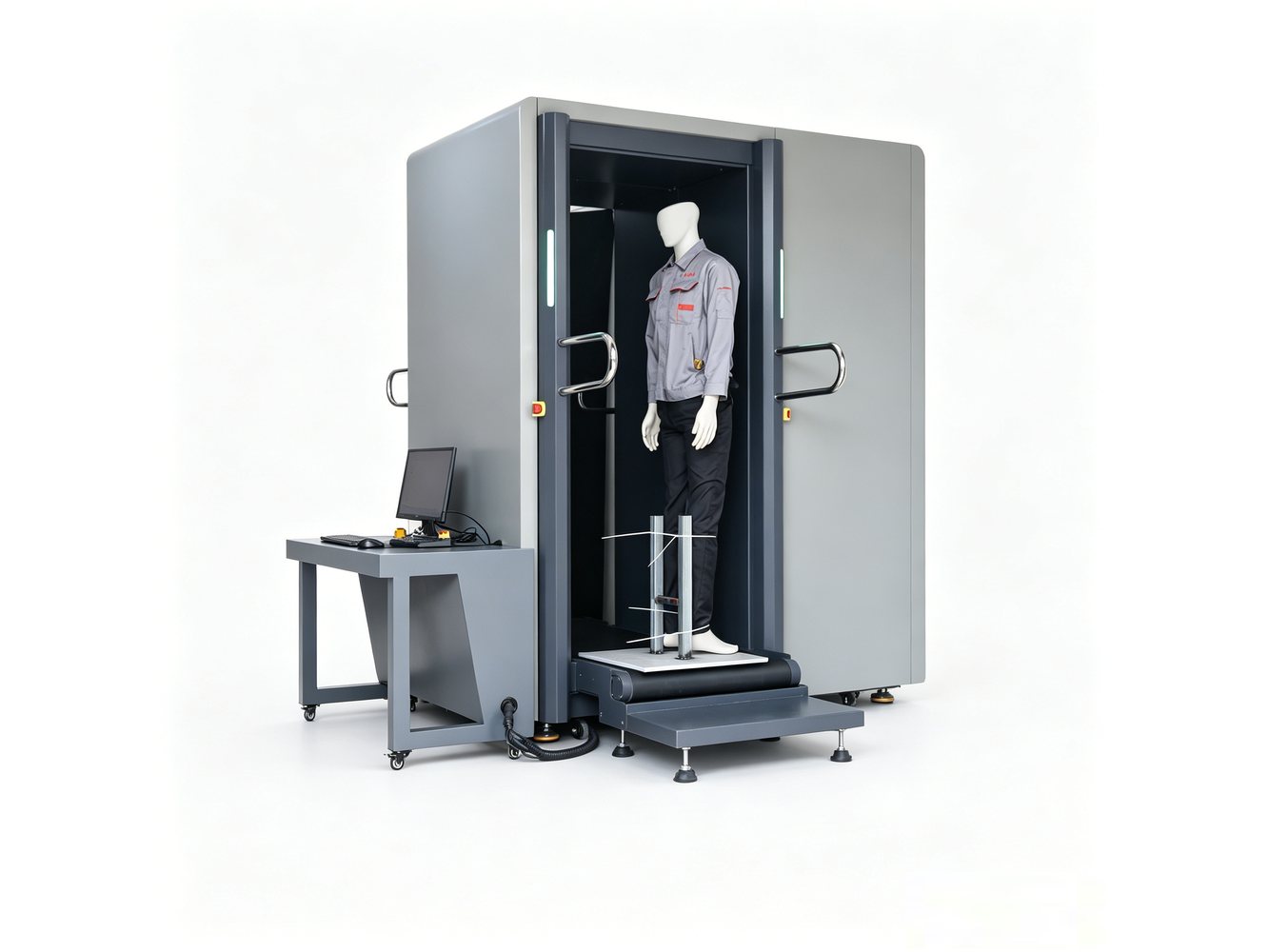
Visitors are the route that a metal detector alone cannot close. A walk-through gate finds metal; it cannot find a ceramic blade, a wrapped package, a SIM card or a mobile phone concealed under clothing or internally. That is the specific job of a transmission body-screening system at the visitor entrance: a single pass produces a complete image of both metallic and non-metallic items, in under seven seconds, at no more than 0.25 µSv per inspection.
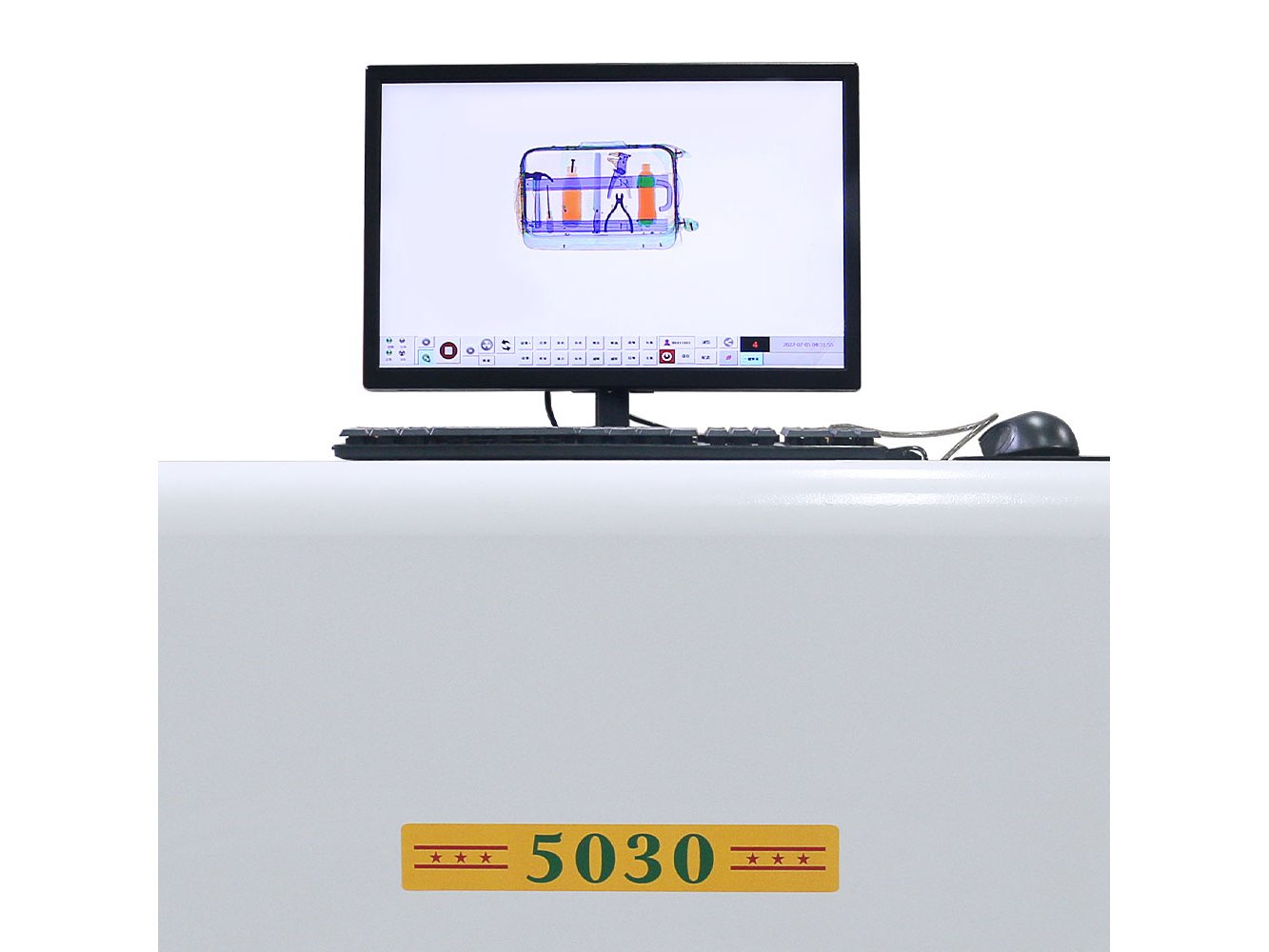
Staff are the second route, and the uncomfortable truth in most facilities is that they are the hardest to screen because everyone knows everyone. Metal detection at the staff door, combined with a handheld check, gives a consistent procedure that does not depend on judgement about who is walking through. Mail and property is the third: a compact X-ray unit reads paper, board and padded envelopes with organic material discrimination, which is exactly where paper-based concealment shows up.
Deliveries and vehicles close the list. Cartons and palletised goods need a tunnel sized to the carton, not to the bag, and the vehicle gate needs undercarriage inspection that does not stop every vehicle for a manual mirror check. Undercarriage imaging at pass-through speed with a stored image per vehicle does both.
How a correctional facility is usually equipped. Final configuration follows the site's procedures and current regulations.
| Entry point | Equipment | Why this choice |
|---|---|---|
| Visitor processing | TS-F20090 full-body X-ray screening system | Detects metallic and non-metallic contraband concealed under clothing, in artificial limbs or internally. Under 7 seconds per inspection at ≤ 0.25 µSv, open tunnel format so the queue keeps moving. |
| Staff entrance | Walk-through metal detector TS-WD33D + handheld MD-3003B1 | 33 zones with 2000 sensitivity levels each and foot-zone tuning. The handheld resolves alarms without moving the officer off the gate. |
| Mail, property and packages | Compact X-ray scanner TS-5030A | Organic, inorganic and mixed materials are colour-coded on screen, so paper-based concealment and dense items are separated in one pass. |
| Deliveries and stores | Medium-tunnel X-ray scanner TS-6550 | 650 × 500 mm tunnel and 180 kg conveyor load for cartons and bulk supplies. |
| Vehicle gate and perimeter | Under vehicle surveillance system | Undercarriage images captured as the vehicle passes, stored with the plate record for later review. |
Eight things that appear on almost every specification we receive for this sector.
A visitor screening point has two customers: the security requirement and the family on the other side of it. In practice the two are served by the same thing — a procedure that is fast, predictable and identical for everyone. The body-screening system's open tunnel format allows continuous flow rather than the cabinet queueing that enclosed units create, and the scan takes under seven seconds, so a visitor hall does not become a waiting room.
Three operational points are worth settling with the facility's own procedures and regulator before installation, and we raise them because they decide whether the equipment is used as intended. The first is consent and signage: the procedure and its legal basis are set by the facility. The second is who reviews images and under what protocol — the system produces a black-and-white post-scan still image for review by a trained operator, and the facility's staffing rules govern who that is. The third is image handling and retention, which follows the facility's policy and applicable law; we can tell you what the system stores and how it is retrieved, and your policy decides what is kept.
We supply the equipment and the documentation; the framework around it belongs to the institution. Where a requirement is beyond the equipment's design — a different detection principle, a different standard, a different dose limit — we will say so before you buy rather than after.
A metal detector detects metal. It cannot see a ceramic blade, a plastic weapon, a wrapped package, a phone or a SIM card concealed under clothing or internally. The body-screening system produces an image of both metallic and non-metallic items in a single pass, which is why it sits at the visitor entrance rather than replacing the gate further down the flow.
No more than 0.25 µSv per inspection, measured at tunnel centre, with 100% duty cycle and real-time radiation monitoring built into the system. The body-screening system is independently tested against ANSI/HPS N43.17-2009. We supply the test documentation with the unit so your regulator's questions are answered from the file rather than from a brochure.
Scan time is under seven seconds and the open tunnel format allows continuous flow, so the practical limit is your own secondary-check procedure rather than the machine. Send us your peak visitor count and staffing model and we will tell you whether one unit is enough.
Metals and weapons, blades and improvised weapons, ceramics and plastics, powders and narcotics, explosives and detonators, electronics including phones and SIM cards, and stones or valuables. Both externally concealed items under clothing or in artificial limbs and internally concealed items are imaged.
The metal detection range reports status, alarm counts and alarm rates over wired or wireless networks and accepts remote parameter changes. Tell us what you already run and we will confirm what can be integrated.
The country, which entry points you are screening, your peak daily visitor or staff volume, the largest item or carton, and the space available at each entrance. We reply with a configuration, the documentation list and pricing.
Tell us the country of installation and the intended use, and we will send the full technical catalogue and pricing.
Contact: Brandon, Sales Manager
Email: deal@topsaful.com
Tel / WhatsApp: +86 156 1616 8054
We usually reply within one business day.