Solutions · Events and venues
Event screening is a throughput problem with a deadline. Everyone arrives in the same ninety minutes, the lanes have to work the first time they are switched on, and by Monday the site has to be gone.
One person lane and one bag lane per channelled queue, with a resolution table behind the gate.
The number of machines is the last decision, not the first. What determines whether an event entrance works is the lane ratio: how many bag lanes to person lanes, how many staff are on secondary checks, and how much space exists in front of the checkpoint for people to separate from their bags before they reach the gate. Get the lane wrong by one and the queue forms in the approach, where it blocks the street and the event starts late.
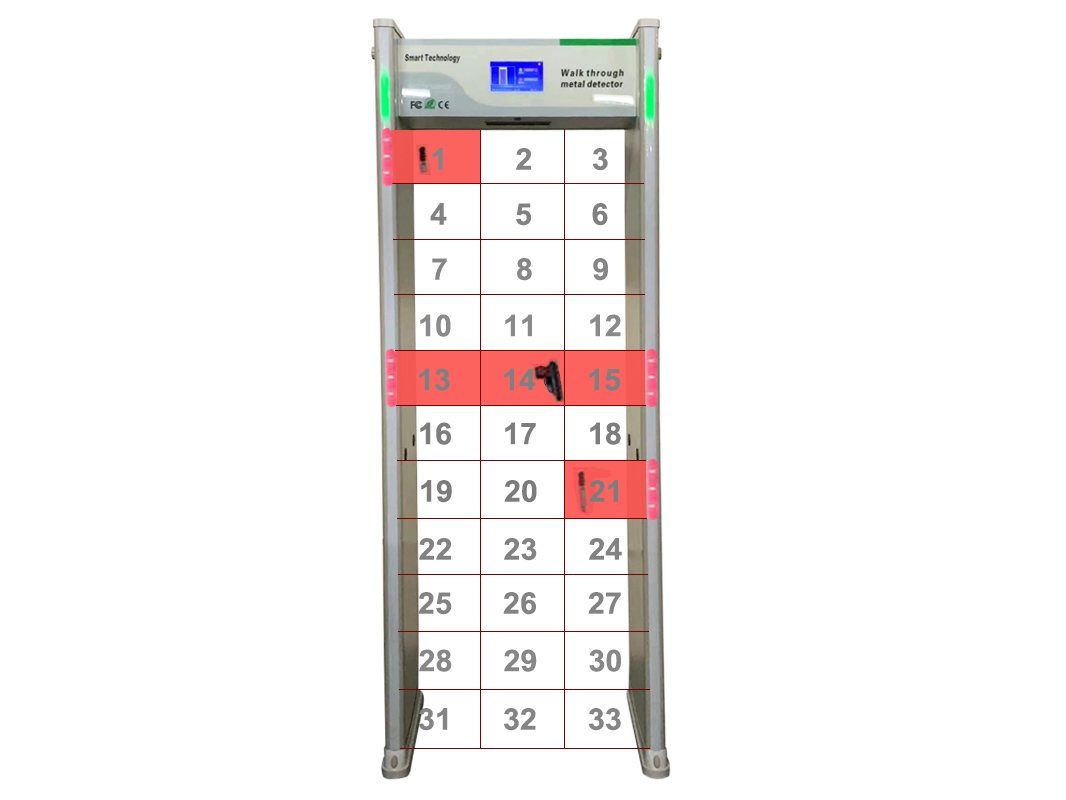
Portable gates exist precisely because event checkpoints are temporary. A portable walk-through unit assembles from panels on site, needs no civil work and no dedicated circuit, and can be packed down and stored between shows. Where a venue keeps a permanent checkpoint for a season, fixed gates with networked management give the venue alarm statistics and remote parameter changes across every lane at once.
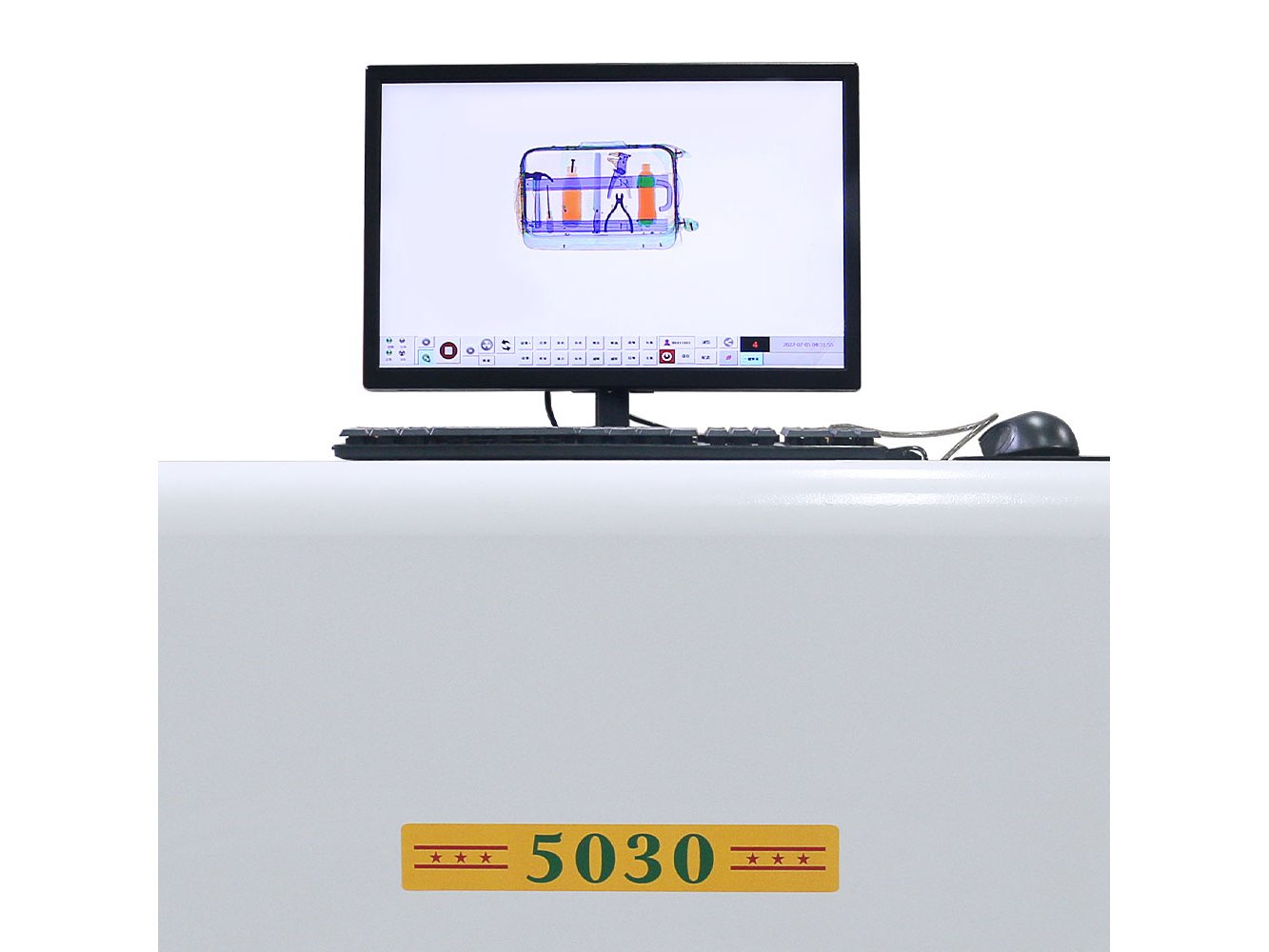
For an event, we usually recommend one person lane and one bag lane side by side per channelled queue, with a handheld detector and a table behind the gate for resolved alarms. The bag lane takes a compact tunnel; event bags are small and the tunnel is not the constraint. What matters more is that the operator screen faces away from the crowd, so the image review does not hold up the queue.
How the five positions on an event site are usually equipped.
| Position | Equipment | Why this choice |
|---|---|---|
| Primary entry lanes | Walk-through metal detectors, relocatable units or fixed TS-WD33D | Relocatable units for temporary sites; fixed 33-zone units where the venue screens the same entrance all season. |
| Bag lane beside each queue | Compact X-ray scanner TS-5030A | Event bags are small. The 500 × 300 mm tunnel handles day bags and camera bags without repacking. |
| Secondary check position | Handheld detectors MD-3003B1 | Resolves borderline alarms at the gate in seconds, which is what keeps the lane moving during peak arrival. |
| VIP, staff and accreditation entrance | Walk-through gate plus bag screening | Separating accredited flows from the public queue protects both, and keeps the public lane predictable. |
| Vehicle and load-in gate | Under vehicle surveillance system | Undercarriage inspection at pass-through speed for artist, equipment and service vehicles. |
The five things that decide whether a temporary checkpoint works on the day.
Three things outlive the event itself: the alarm data, the images, and the paperwork. Alarm counters give the venue a factual record of how many people passed each lane and how many alarmed — useful for planning the next event and for any post-incident review. The X-ray unit archives images automatically, retrievable by date, so an incident can be reconstructed rather than described from memory. And the unit ships with its test reports and technical file, which is what a venue needs when an insurer, a licensing authority or a promoter asks what screening was in place.
Where a venue runs more than one checkpoint, networked gates report status, alarm counts and alarm rates to a single place, and parameters can be changed across every unit in one action. For a festival site with eight lanes that is the difference between one operator walking the perimeter all day and one screen on a table.
We supply outright, and the portable configuration is designed to be reused season after season rather than bought per event. If your deployment is genuinely one-off, the honest advice is to compare the purchase price against the rental market in your country before deciding — we will give you the specification and the crate data you need either way.
The portable gate assembles from panels and the compact scanner sits on its own frame; both are handled by two people and need no building work. Send us the number of lanes and the shift pattern and we will send the assembly sequence so you can plan the labour.
Not when they are set up correctly. Each gate selects its own working frequency automatically, gates can be placed as close as 30 cm apart on the TS-WD33D, and fixed structures are kept clear of the panels. Tell us your lane layout and we will confirm spacing.
The input range is 100–260 VAC at 40–65 Hz, which covers the usual site supplies. Optional battery backup keeps a lane running through a supply interruption or a changeover.
The country, the expected peak arrivals per hour, how many entry lanes you plan, whether bags are screened, and whether the site is permanent or temporary. From that we size the lane count and recommend models.
Tell us the country of installation and the intended use, and we will send the full technical catalogue and pricing.
Contact: Brandon, Sales Manager
Email: deal@topsaful.com
Tel / WhatsApp: +86 156 1616 8054
We usually reply within one business day.