Solutions · Hospitality
A hotel entrance has to do two things at once: stop what should not come in, and keep guests moving without making them feel processed. Every configuration below is sized for that trade-off, not for a theoretical maximum throughput.
Four entry points, four different traffic patterns, one operating logic.
Hotels rarely have one screening problem; they have four entry points with different risk and different traffic. The lobby sees guests and hand luggage at the pace of check-in. The staff and contractor door sees the same faces every day carrying tool bags and personal backpacks — historically the hardest flow to police, because familiarity suppresses vigilance. The banqueting and conference floor sees an event's worth of people in one hour and then nothing for a week. Goods-in sees delivery cartons, laundry and outside contractors.
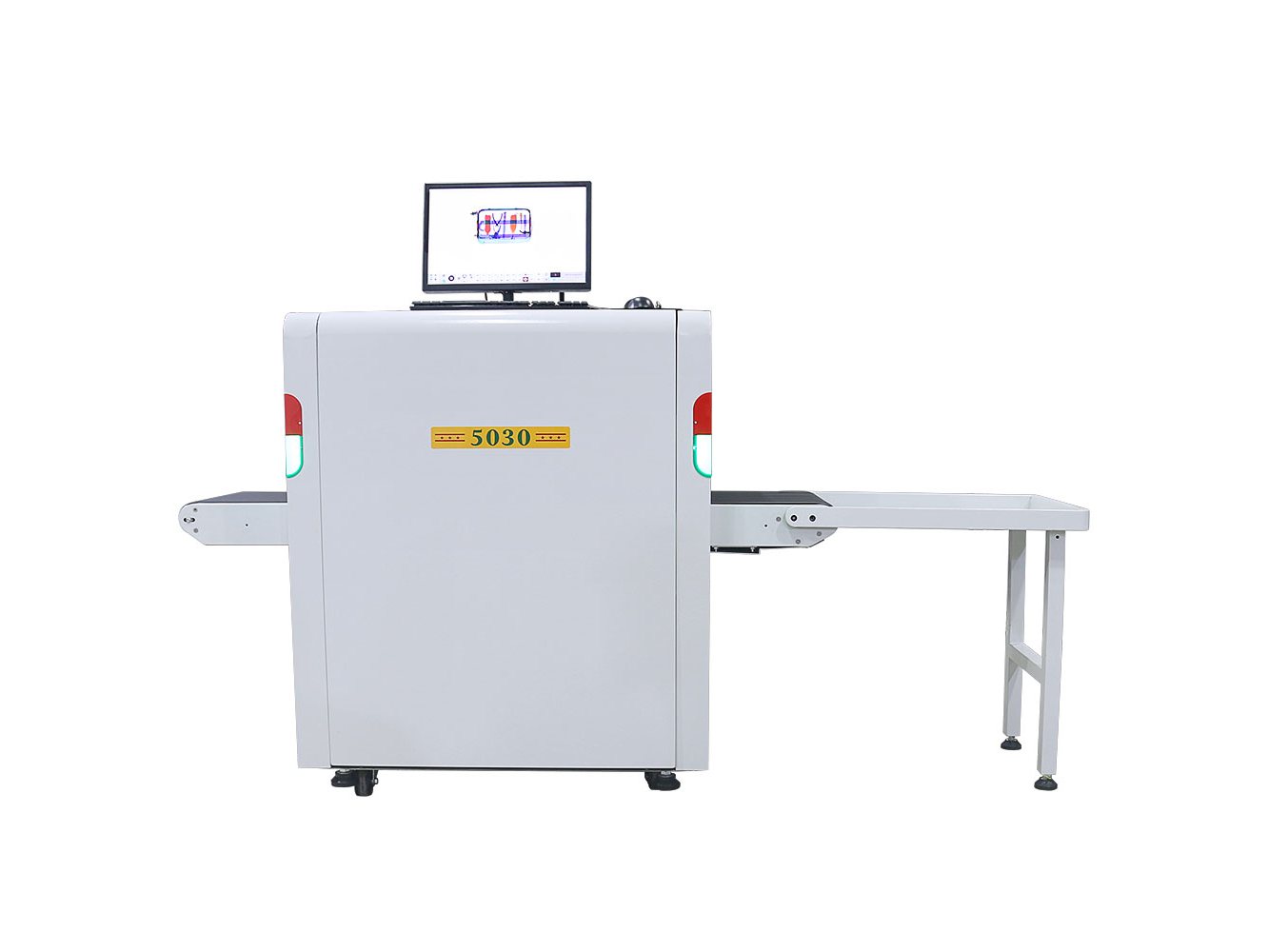
Space and appearance decide more than specifications do. A compact unit with a 500 × 300 mm tunnel measures 1660 × 746 × 1165 mm and weighs 284 kg — it passes a standard doorway, runs from a normal single-phase supply, and does not need a dedicated room: the operator screen sits at the discharge end. Panels can be supplied unbranded or in the hotel's own colour, so the checkpoint reads as furniture rather than as equipment.
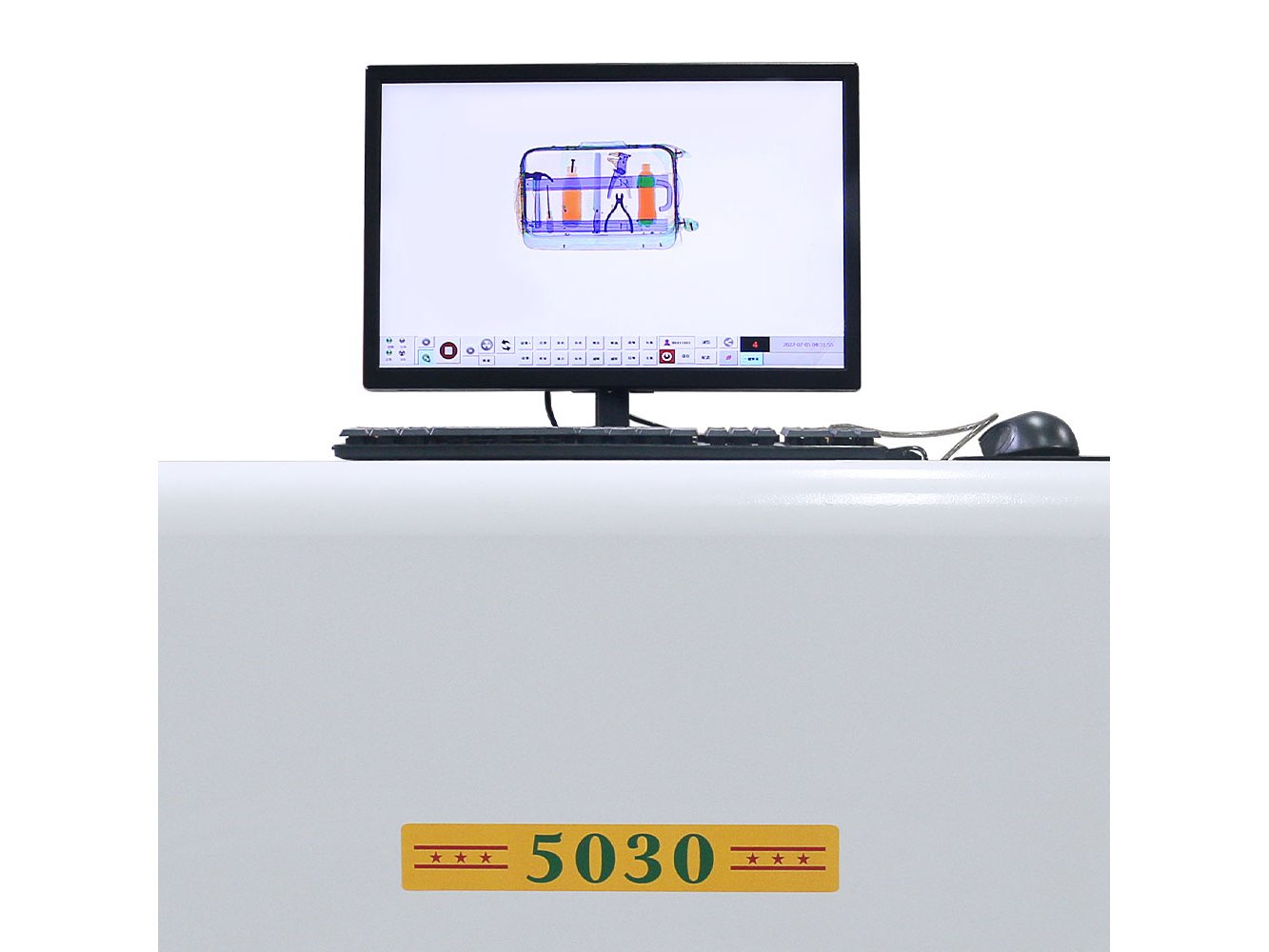
Guest experience is a throughput question in disguise. The conveyor moves at 0.2 m/s, so a bag is in the tunnel for a few seconds and the guest collects it on the far side without waiting. Material discrimination separates organic, inorganic and mixed contents on screen, which cuts the number of bags that have to be opened in front of the guest — the single most common complaint about entrance screening.
A typical hotel deployment. Final configuration follows a site survey of entrance width, item mix and staffing.
| Zone | Equipment | Why this choice |
|---|---|---|
| Main entrance / lobby | Compact X-ray scanner TS-5030A + walk-through metal detector TS-WD33D | Hand luggage and backpacks pass the tunnel while guests walk the gate. Both units are freestanding, so the lobby keeps its layout. |
| Staff and contractor door | Walk-through gate TS-WD33D + handheld detector MD-3003B1 | The highest-risk flow in most properties. Screening tool bags on entry is the point; the handheld resolves alarms in seconds without a second gate. |
| Banqueting, conference and event space | Mobile gate placement plus X-ray where volume justifies it | Screening scales to the event. A lane that is staffed for three days a month is usually the wrong unit to buy outright. |
| Goods-in, laundry and deliveries | Medium-tunnel X-ray scanner TS-6550 | Delivery cartons are larger than guest baggage. A 650 × 500 mm tunnel takes them without repacking at the door. |
| Car park and vehicle gate | Under vehicle surveillance system | Undercarriage images captured at pass-through speed, integrated with licence plate recognition where the site needs a record. |
The details that decide whether an entrance stays calm during a 200-guest arrival.
We draw a clear line between bag screening and person screening. Bag and parcel X-ray at a hotel entrance is routine across the market and is what the configurations above use. A walk-through metal detector detects metal objects and emits no ionising radiation. A transmission body-screening system is a different category of equipment, intended for institutional and law-enforcement use; we do not propose it for hotel entrances and would advise against it where a metal detector and a bag scanner do the job.
Two operational points are worth settling before installation rather than after. First, signage: guests respond far better to a visible, neutral explanation of what is being screened than to an unmarked machine. Second, local regulation: the equipment is supplied for institutional use, and any national or municipal approval for operating it in a commercial premises is the operator's responsibility. We support that process with the test reports and technical file that come with the unit, and we will tell you plainly if a requirement in your market is outside what the equipment is designed to do.
Entrance bag screening is now accepted practice in the markets where it is deployed, but the presentation matters more than the machine. A single tunnel on the guest's own side of the desk, an operator who does not open bags unless the image requires it, and a neutral sign explaining the purpose are what keep it low-friction. Material discrimination on screen reduces how often a bag has to be opened at all.
Yes. Panels, software strings and configuration can be customised for integrators and for properties that do not want manufacturer branding visible in a lobby. OEM and ODM terms are quoted with the equipment.
Screening does not damage electronics. The reference configuration is guaranteed safe for ASA/ISO 1600 film. If you routinely screen photographic film or magnetic media, tell us and we will confirm the applicable limits for the model you are considering.
The compact unit is 1660 × 746 × 1165 mm and weighs 284 kg; the 650 mm tunnel unit is 2040 × 920 × 1300 mm and weighs 450 kg. Both are freestanding and need clearance at both ends of the conveyor plus one operator position. Send a plan or a photo and we will mark the layout.
The country of installation, the entrance or zone to be screened, the largest bag or carton you expect, your peak arrivals per hour, and whether you want one lane or several. From that we recommend a model and send the datasheet with pricing.
Tell us the country of installation and the intended use, and we will send the full technical catalogue and pricing.
Contact: Brandon, Sales Manager
Email: deal@topsaful.com
Tel / WhatsApp: +86 156 1616 8054
We usually reply within one business day.